
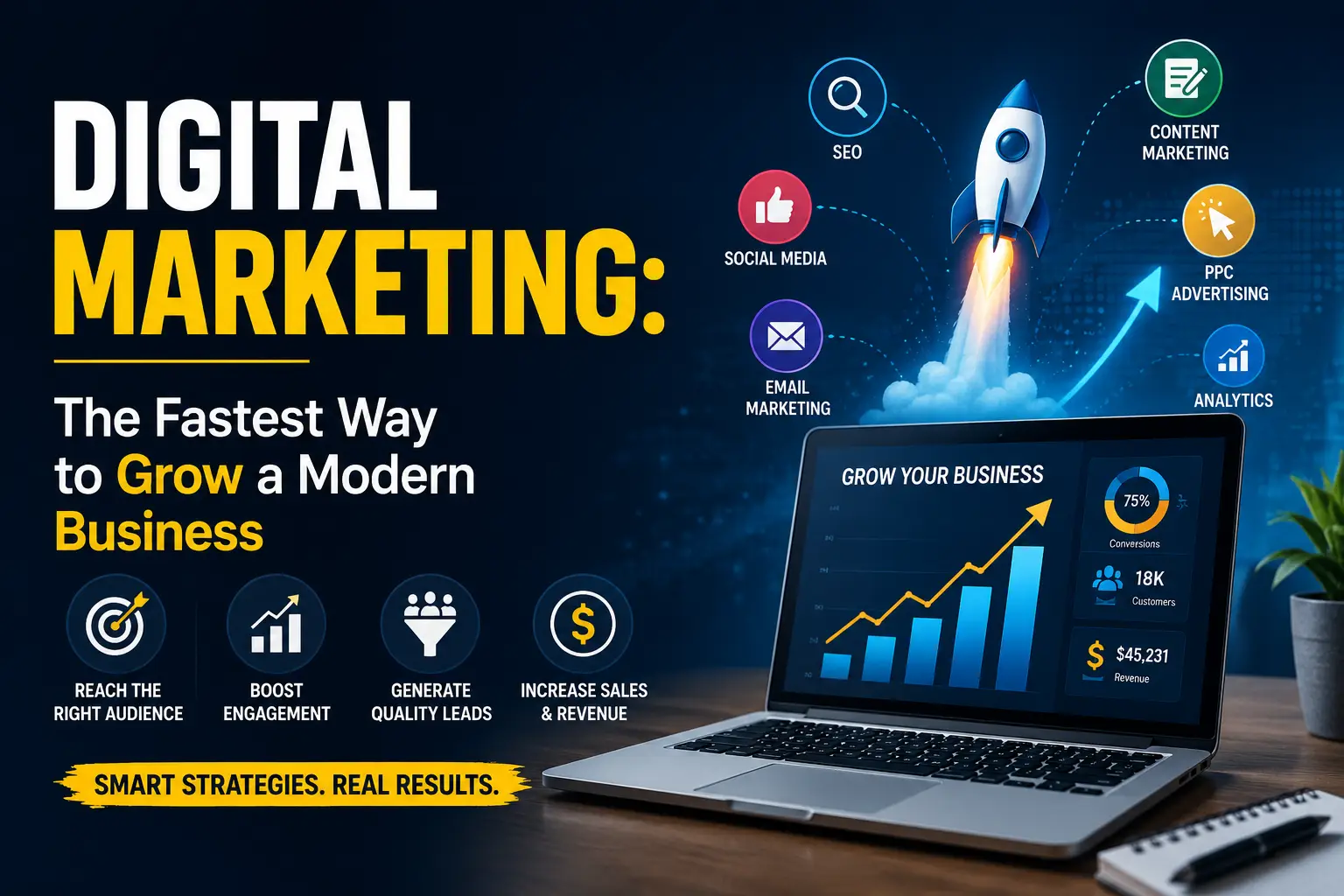
Digital marketing is no longer optional. Businesses that ignore digital marketing lose visibility, traffic, and revenue every single day. Customers now search online before they buy anything. They compare reviews, visit websites, check Instagram pages, and watch videos before making decisions.
That shift changed everything.
A local clothing store can now compete with large brands through smart digital marketing. A small restaurant can fill tables using targeted Instagram ads. A startup can generate leads through SEO without spending huge money on traditional advertising.
The biggest reason businesses invest in digital marketing is simple: measurable ROI. You can track clicks, leads, conversions, and sales in real time. You no longer guess what works. You know what works.
Brands that grow fast today focus on strategy, content, search visibility, and customer attention. That is exactly where digital marketing creates results.
Why Digital Marketing Delivers Better ROI Than Traditional Advertising
Traditional advertising costs a lot and gives limited tracking. A billboard may look impressive, but you cannot clearly measure how many people purchased because of it.
Digital marketing changes that.
You can launch a campaign today and track every result tomorrow. Platforms like Google Ads and Meta Ads show impressions, clicks, conversions, and customer behavior instantly.
For example, a local gym spending ₹15,000 on newspaper ads may struggle to measure results. The same gym can run targeted digital marketing campaigns on Instagram and Google targeting users within a 5-kilometer radius. That strategy reaches people already searching for fitness solutions.
The difference becomes obvious:
- Better audience targeting
- Lower customer acquisition cost
- Faster testing
- Real-time analytics
- Higher conversion opportunities
Digital marketing also helps businesses scale faster. A company can start with a small budget, analyze performance, and increase spending only on campaigns that produce revenue.
That flexibility matters.
Many brands waste money because they focus on vanity metrics like followers and likes. Smart businesses focus on traffic quality, lead generation, and sales. Effective digital marketing always connects strategy with measurable business outcomes.
Email marketing is another strong example. A clothing brand can send product recommendations to previous buyers and generate repeat sales without huge advertising costs. That kind of retention marketing increases profit margins significantly.
Search engine optimization also delivers long-term ROI. Once a page ranks on Google, it can attract traffic for months without paying for every click.
That is why digital marketing often outperforms traditional advertising in both speed and profitability.
Digital Marketing Strategies That Actually Generate Leads
Many businesses fail because they copy trends instead of building systems. Successful digital marketing depends on consistent strategies that solve customer problems.
SEO remains one of the strongest traffic channels.
When people search “best running shoes” or “digital marketing agency near me,” they already have buying intent. Ranking for those searches brings highly targeted visitors to your website.
Strong SEO requires:
- Keyword-focused content
- Fast-loading pages
- Mobile optimization
- Internal linking
- Helpful information
Businesses that publish useful content regularly often dominate search results over time.
Content marketing also plays a huge role in digital marketing success. Blogs, videos, case studies, and guides build trust before a sales conversation even begins.
For example, a software company can publish tutorials showing how its product saves time. That content attracts users searching for solutions. Instead of forcing sales, the business educates customers first.
Social media marketing works best when brands create attention, not noise.
Short-form video content currently drives strong engagement because audiences prefer fast, visual information. Brands using Instagram Reels, YouTube Shorts, and LinkedIn videos often gain visibility faster than businesses relying only on text posts.
However, smart digital marketing avoids random posting.
Every piece of content should support one of these goals:
- Brand awareness
- Lead generation
- Customer trust
- Sales conversion
Paid advertising accelerates growth when businesses already understand their audience. Running ads without data usually burns money. Running ads with customer insights often scales revenue quickly.
Retargeting is especially powerful.
A customer who visited your website but did not buy still remembers your brand. Digital marketing platforms allow businesses to retarget those users with personalized ads, discounts, or reminders.
That simple strategy increases conversion rates dramatically.
How Small Businesses Use Digital Marketing to Compete With Bigger Brands
Small businesses no longer need massive budgets to grow. Smart execution matters more than company size.
A small skincare brand with strong digital marketing can outperform larger competitors through authentic content and niche targeting.
Customers trust brands that feel real.
That is why user-generated content performs so well. Reviews, customer photos, testimonials, and behind-the-scenes videos create credibility faster than polished corporate ads.
Local SEO gives small businesses another major advantage.
When someone searches:
- “best café near me”
- “dentist in Delhi”
- “digital marketing services”
Google prioritizes businesses with optimized profiles, strong reviews, and location relevance.
A restaurant with an active Google Business Profile and consistent reviews can attract daily traffic without expensive advertising.
Digital marketing also allows smaller brands to build communities. Instead of chasing millions of followers, businesses can focus on loyal audiences who regularly purchase products and recommend the brand.
Take D2C fashion brands as an example.
Many started with Instagram pages, influencer collaborations, and performance ads. They built traction by understanding customer behavior better than traditional retailers.
Speed becomes a competitive advantage.
Large companies often move slowly because of approvals and complex systems. Small businesses can test new offers, launch campaigns, and adjust messaging quickly.
That agility helps them win attention faster.
Influencer marketing also changed digital marketing completely. Customers trust creators more than traditional advertisements. A micro-influencer with 20,000 loyal followers often generates better engagement than celebrity campaigns with weak audience trust.
The key is relevance.
A fitness coach promoting gym wear makes more sense than random influencer partnerships. Effective digital marketing aligns audience interest with brand value.
The Future of Digital Marketing Belongs to Data and Creativity
Digital marketing keeps evolving because customer behavior changes constantly.
AI tools now help businesses create content faster, analyze campaigns, and improve targeting. Automation handles repetitive tasks while marketers focus on strategy and creativity.
But technology alone does not guarantee success.
Customers still respond to strong storytelling, useful content, and authentic communication. Brands that sound robotic usually fail to build loyalty.
The future of digital marketing will reward businesses that combine:
- Data-driven decisions
- Human-centered messaging
- Fast content creation
- Personalized experiences
Video content will continue dominating attention across platforms. Search behavior will also evolve as AI-powered search tools become more common.
Businesses must adapt quickly.
Voice search optimization, conversational content, and interactive experiences already influence modern digital marketing strategies.
Privacy changes also matter. Third-party cookies continue disappearing, which means brands need stronger first-party data systems like email lists and customer communities.
Companies that own their audience will stay stronger long term.
Another major shift involves personalization.
Customers expect businesses to understand their preferences. Generic messaging no longer performs well. Digital marketing campaigns now need customized recommendations, targeted offers, and relevant communication.
Brands using data intelligently will outperform competitors who rely on guesswork.
The businesses winning today are not always the biggest companies. They are usually the fastest learners.
Conclusion: Digital Marketing Drives Real Business Growth
Digital marketing gives businesses something traditional advertising never fully offered: precision, speed, and measurable growth.
You can identify your audience, test campaigns quickly, track every conversion, and improve performance continuously. That level of control makes digital marketing one of the most powerful growth tools available today.
The companies growing fastest are not relying on luck. They use SEO, content marketing, paid advertising, email campaigns, and social media strategically. They focus on customer behavior, not assumptions.
Most importantly, they understand one thing clearly: attention drives revenue.
Digital marketing helps businesses capture that attention, turn it into trust, and convert it into sales. Brands that adapt early will continue growing while slower competitors struggle to stay visible.